
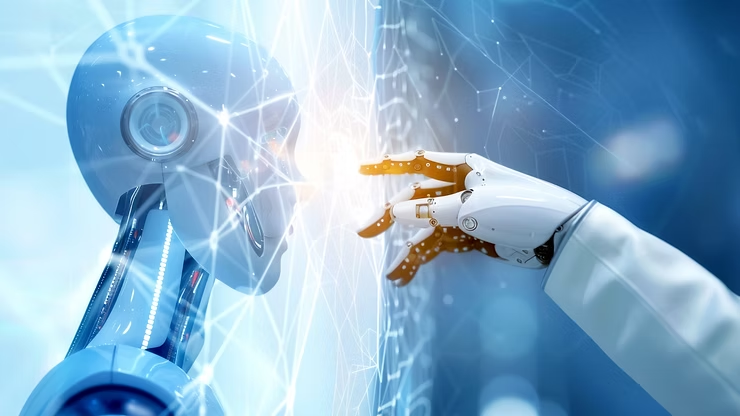
Artificial Intelligence (AI) has emerged as one of the most influential technological advancements of the modern era. No longer limited to science fiction or experimental research, AI is now deeply embedded in everyday life, shaping how people work, communicate, make decisions, and solve complex problems. Its rapid evolution is redefining industries and transforming the way society functions.
At its core, artificial intelligence refers to computer systems designed to perform tasks that typically require human intelligence. These tasks include learning from data, recognizing patterns, understanding language, making predictions, and adapting to new information. Through technologies such as machine learning, natural language processing, and computer vision, AI systems continuously improve their performance, becoming more accurate and efficient over time.
One of the most significant impacts of AI can be seen in business and industry. Organizations use AI to automate processes, analyze large volumes of data, and optimize operations. From customer service chatbots to predictive analytics and supply chain optimization, AI enables businesses to increase efficiency, reduce costs, and make data-driven decisions. As a result, companies that adopt AI technologies gain a competitive advantage in an increasingly digital marketplace.
AI has also revolutionized the way information is processed and utilized. Advanced algorithms can analyze complex datasets at speeds far beyond human capability, uncovering insights that were previously inaccessible. This has transformed fields such as finance, marketing, healthcare, and scientific research. In healthcare, for example, AI assists in disease detection, medical imaging analysis, and personalized treatment planning, improving both accuracy and patient outcomes.
In everyday life, artificial intelligence enhances convenience and accessibility. Voice assistants, recommendation systems, navigation apps, and smart devices rely on AI to deliver personalized experiences. These technologies learn from user behavior to provide relevant suggestions, streamline tasks, and improve efficiency. While often unnoticed, AI works continuously in the background to simplify daily activities and improve user experience.
Education is another area where AI is creating meaningful change. Intelligent learning platforms adapt to individual learning styles and progress, enabling personalized education at scale. Students can access tailored content, receive instant feedback, and learn at their own pace. Educators, in turn, benefit from data-driven insights that help identify learning gaps and improve teaching strategies.
Despite its many advantages, the rise of artificial intelligence also presents important challenges. Ethical considerations such as data privacy, algorithmic bias, transparency, and job displacement require careful attention. As AI systems increasingly influence decision-making, ensuring fairness, accountability, and responsible use becomes essential. Governments, organizations, and developers must work together to establish guidelines that balance innovation with ethical responsibility.
Another concern surrounding AI is its impact on the workforce. While automation may replace certain repetitive tasks, it also creates new opportunities that require advanced skills, creativity, and critical thinking. The future of work will depend on how individuals and institutions adapt by investing in education, reskilling, and lifelong learning. AI is not merely replacing jobs; it is reshaping them.
As artificial intelligence continues to advance, its influence will extend even further into everyday life and decision-making. When guided by ethical principles and human-centered design, AI has the potential to support innovation, improve efficiency, and address complex global challenges. The future of AI depends not only on technological progress, but on the responsibility with which it is developed and applied
Looking ahead, artificial intelligence will continue to evolve and integrate more deeply into society. Emerging developments such as generative AI, autonomous systems, and intelligent robotics hold the potential to further transform industries and everyday life. The true value of AI lies not just in its technical capabilities, but in how thoughtfully it is designed and applied to serve human needs.
artificial intelligence is a powerful force shaping the present and defining the future. When developed and used responsibly, AI enhances productivity, drives innovation, and improves quality of life. By embracing its potential while addressing its challenges, society can harness artificial intelligence as a tool for sustainable progress and meaningful advancement.